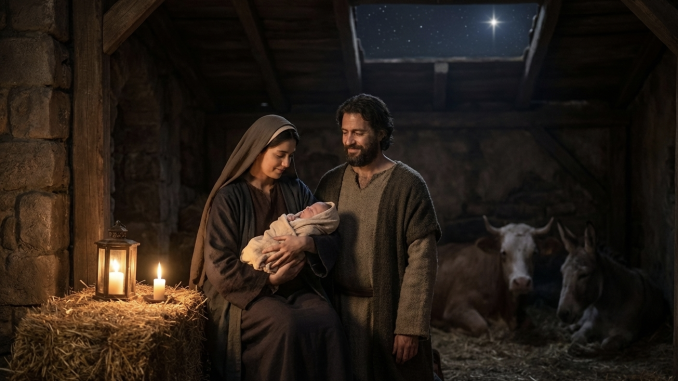
Christmas didn’t start with lights, gifts, or shopping lists.
Long before decorated trees and holiday songs, it began with a simple story of hope.
Over 2,000 years ago, in a small town called Bethlehem, a child named Jesus was born. Christians believe this child was sent to bring love, peace, and forgiveness to the world. His birth is the heart of what Christmas truly means.
But here’s what makes the story powerful — it wasn’t grand or luxurious.
Jesus was born in a humble place, surrounded not by royalty, but by animals, shepherds, and ordinary people. That simple beginning taught an important message: kindness and love matter more than wealth or power.
Why December 25?
The Bible doesn’t give an exact date for Jesus’ birth.
December 25 was later chosen to represent light and hope during the darkest time of the year. Over time, this date became a symbol of new beginnings.
How Traditions Were Born
As years passed, different cultures added their own traditions:
🎄 Christmas trees symbolized life and hope
🕯️ Lights and candles represented light overcoming darkness
🎁 Gift-giving reminded people of the gifts brought by the Wise Men — and the idea of giving with love
🎶 Carols were created to share joy and spread the message of peace
These traditions weren’t about luxury. They were about connection.
What Christmas Means Today
Today, Christmas is celebrated all around the world — by Christians and non-Christians alike. For some, it’s a religious holiday. For others, it’s about family, generosity, and togetherness.
But at its core, Christmas still carries the same message it started with:
✨ Love more
✨ Give more
✨ Forgive more
✨ Hope more
A Simple Thought
Christmas isn’t about having everything.
It’s about remembering what truly matters — people, love, and compassion.
And that’s why, even after centuries, Christmas still feels special.